
Cognitive Foundations for Interaction Design
This collection brings together five graduate papers in human factors and reframes them as one coherent interaction design sequence. Rather than treating cognition as abstract theory, the seminar uses it as design leverage: how people detect signals, organize visual information, form expectations, make judgments, and fail when systems demand too much. The result is a practical foundation for designing interfaces that work with real human limits instead of against them.
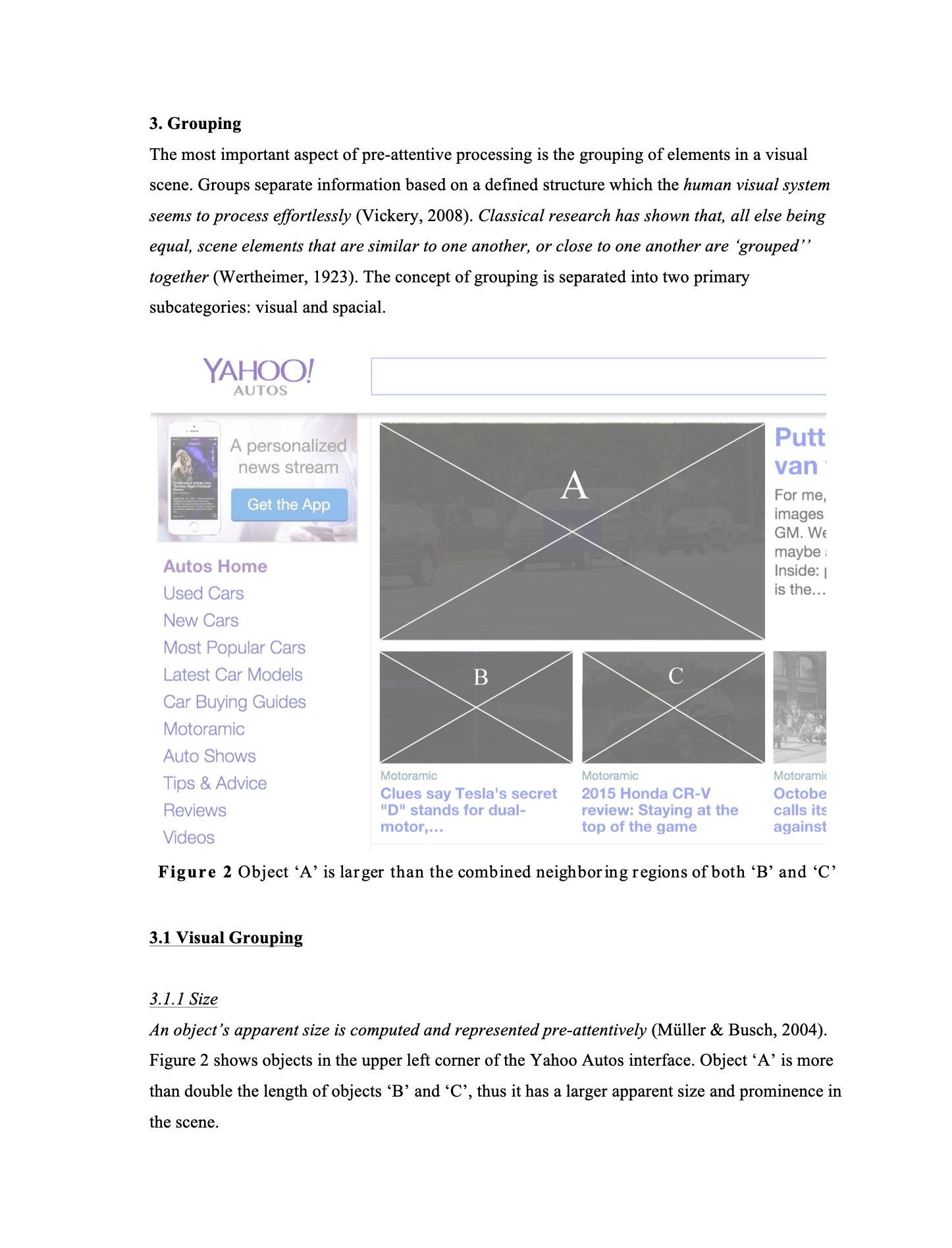
Pre-attentive Processing Applied to Yahoo Autos
This paper breaks down how users process a page before they consciously think. It evaluates clutter, spacing, grouping, and color through Gestalt principles and pre-attentive processing. The takeaway is that visual organization isn’t subjective. It directly determines how fast and accurately someone understands a screen. Clutter isn’t just ugly. It increases cognitive cost and slows decision-making.
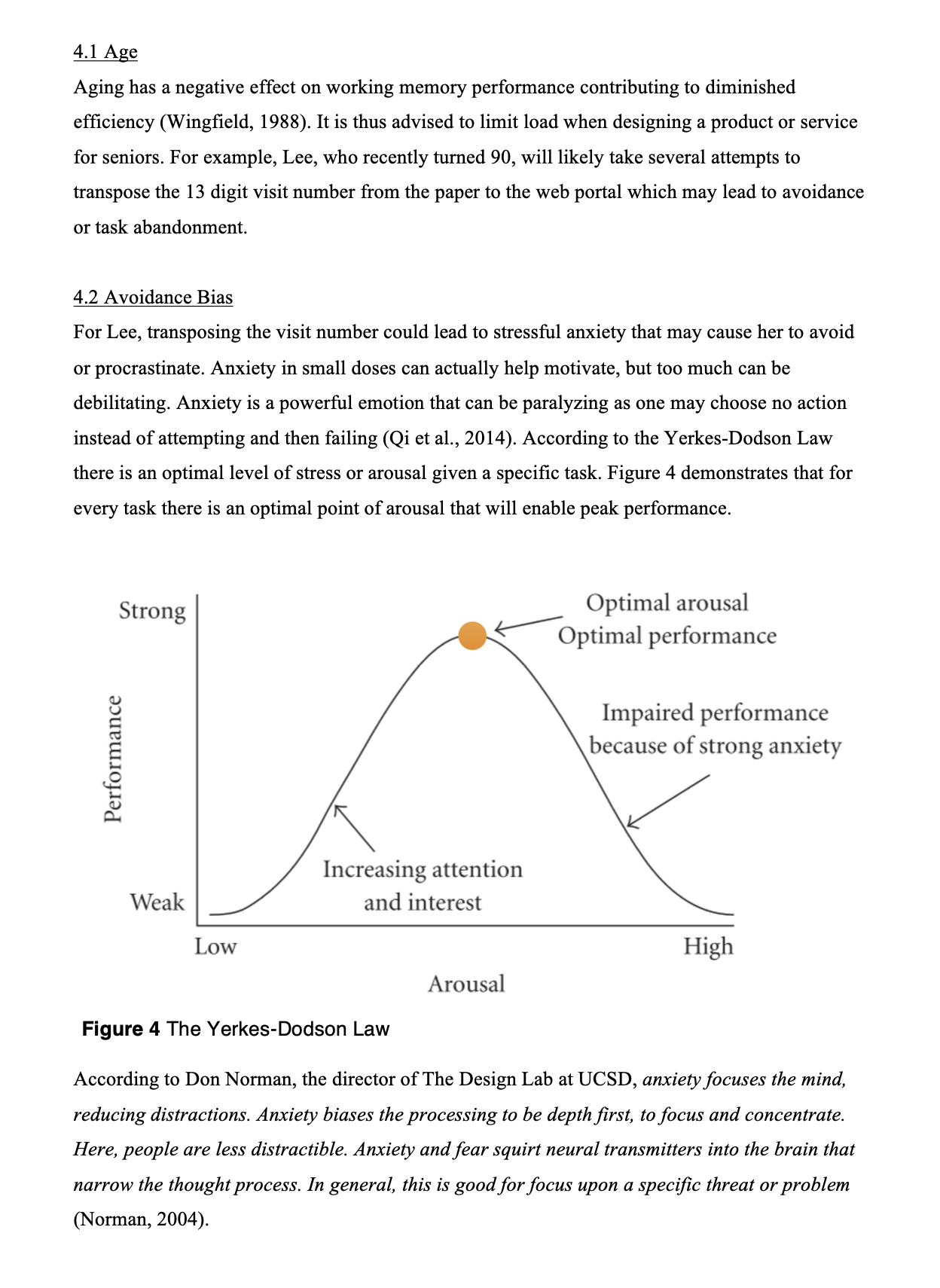
Limitations of Working Memory for a Senior Transposing Long Strings of Numeric Information
This paper studies what happens when systems demand more memory than people have. It focuses on an older adult transcribing long numeric strings in a medical context, highlighting rehearsal limits, error risk, and cognitive load. The conclusion is straightforward: the system is the problem, not the user.
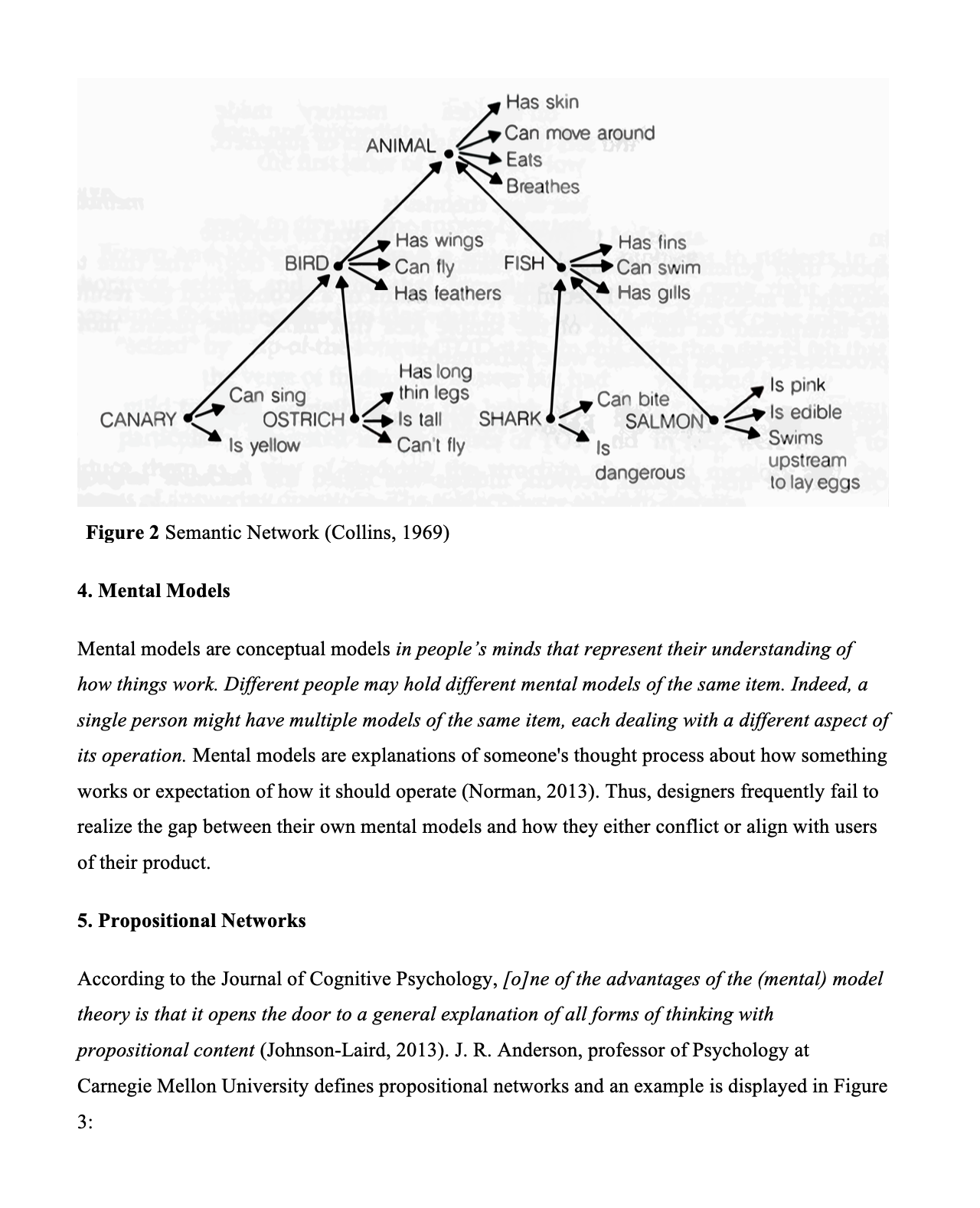
Effects of Prior Knowledge on Using Apple’s Aperture Application
This paper explores how users bring expectations with them. It looks at how prior knowledge shapes interaction with a complex creative tool and where mismatches create hesitation or error. The focus is on mental models, affordances, and the gap between how designers think a system works and how users expect it to work.
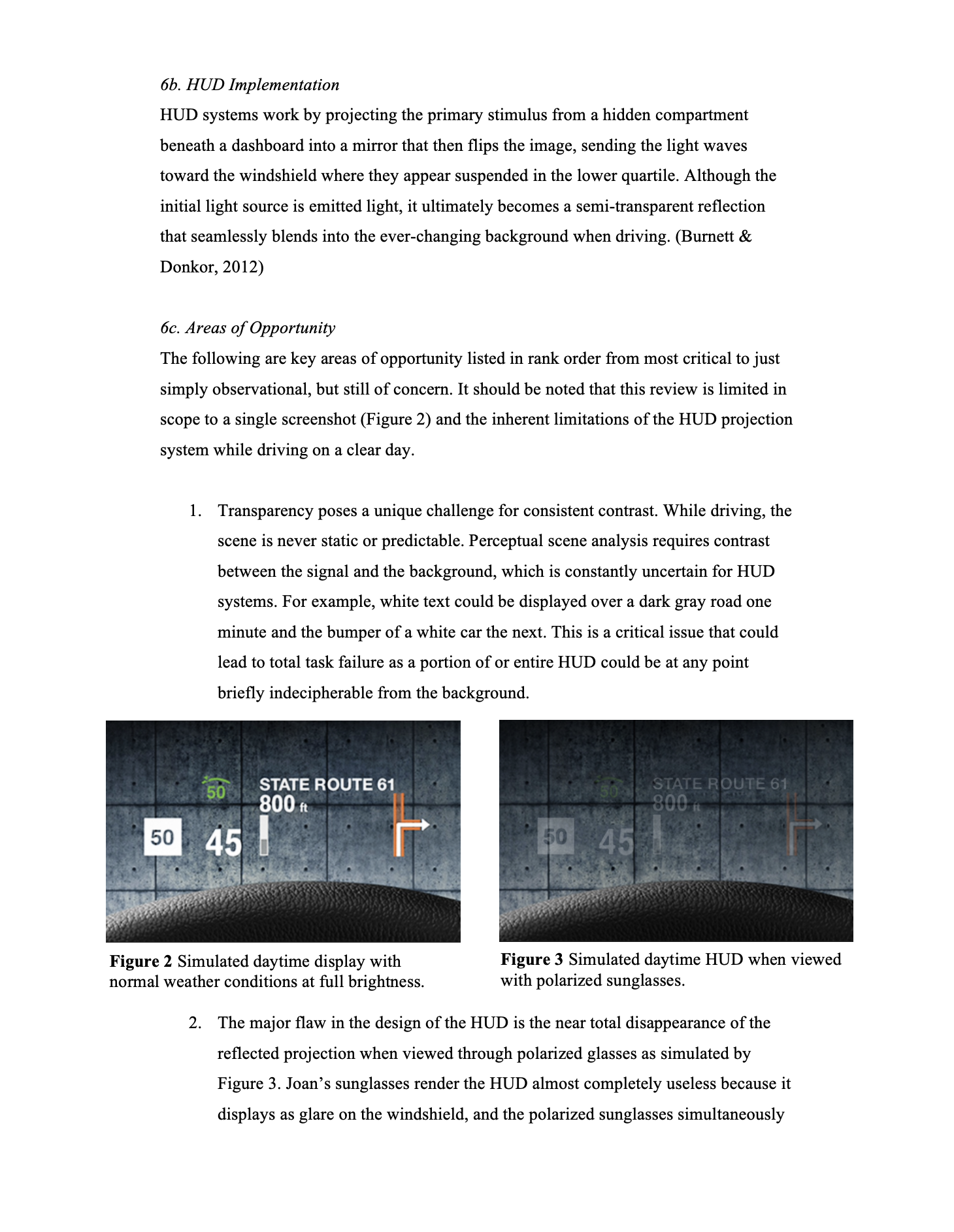
Visual Scene Analysis Applied to an Automotive Head-up Display
This paper examines how visibility actually works in a real-world system where failure has consequences. It looks at contrast, brightness, color, polarization, and ambient conditions to understand what makes information legible on a windshield at speed. The core question is simple but unforgiving: what has to be true for a driver to see something in time to act on it?
Metacognitive Decision-Making Applied to an Automotive Purchase
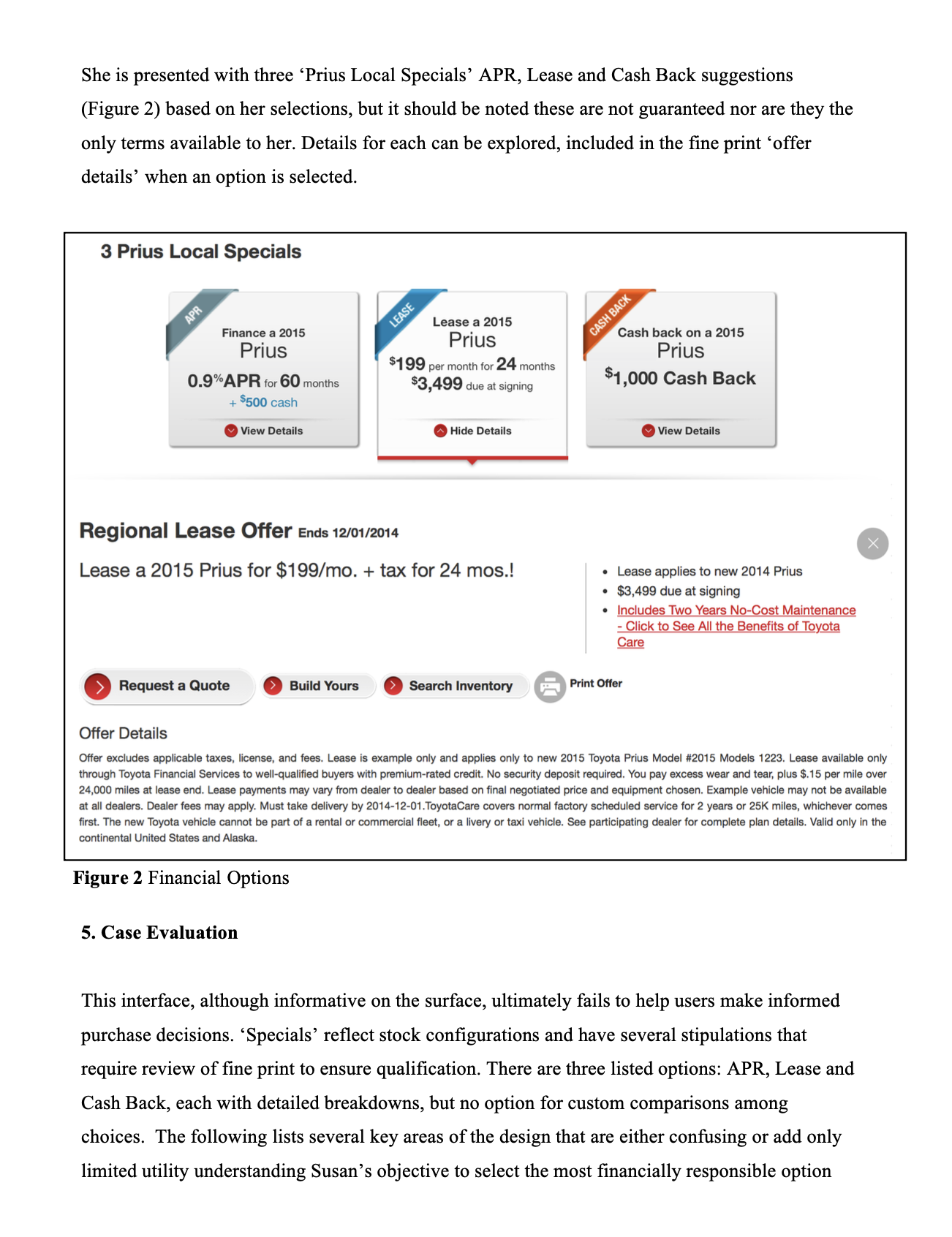
This paper looks at how people make decisions when the stakes are high and the options are complex. It analyzes planning, monitoring, and evaluation in a car-buying flow, with a focus on satisficing and uncertainty. The key insight is that users aren’t just choosing. They’re managing doubt.